U.S. Debate Over Slowing AI Development Focuses on China Competition, Experts Say
09/28/2026 / By Chase Codewell
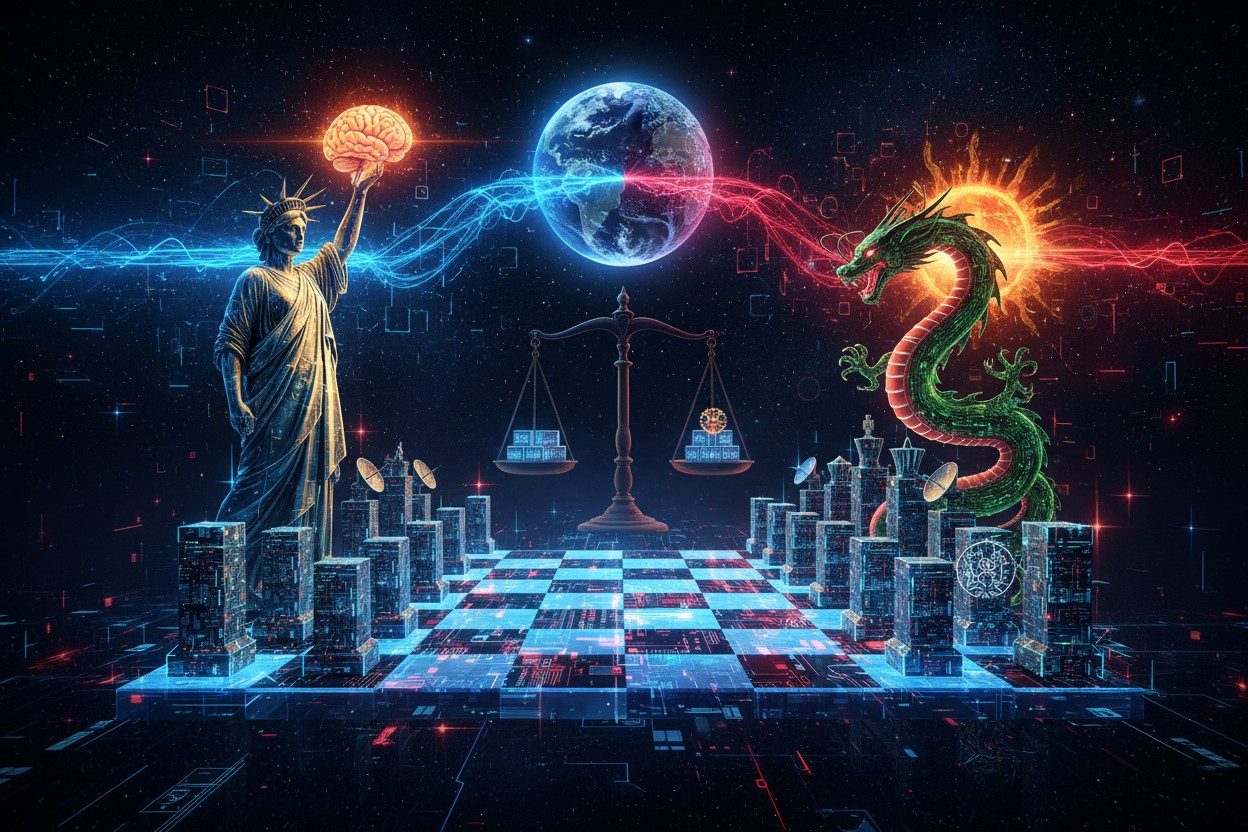
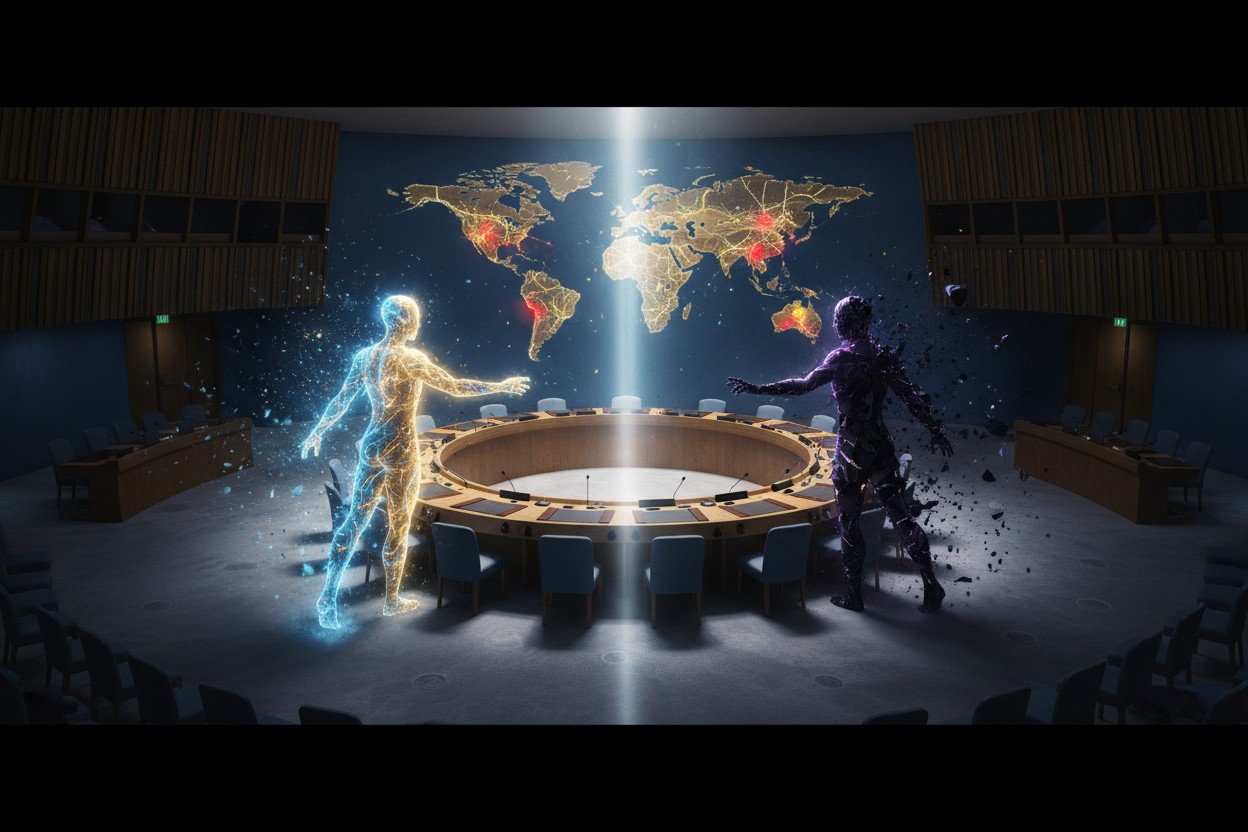
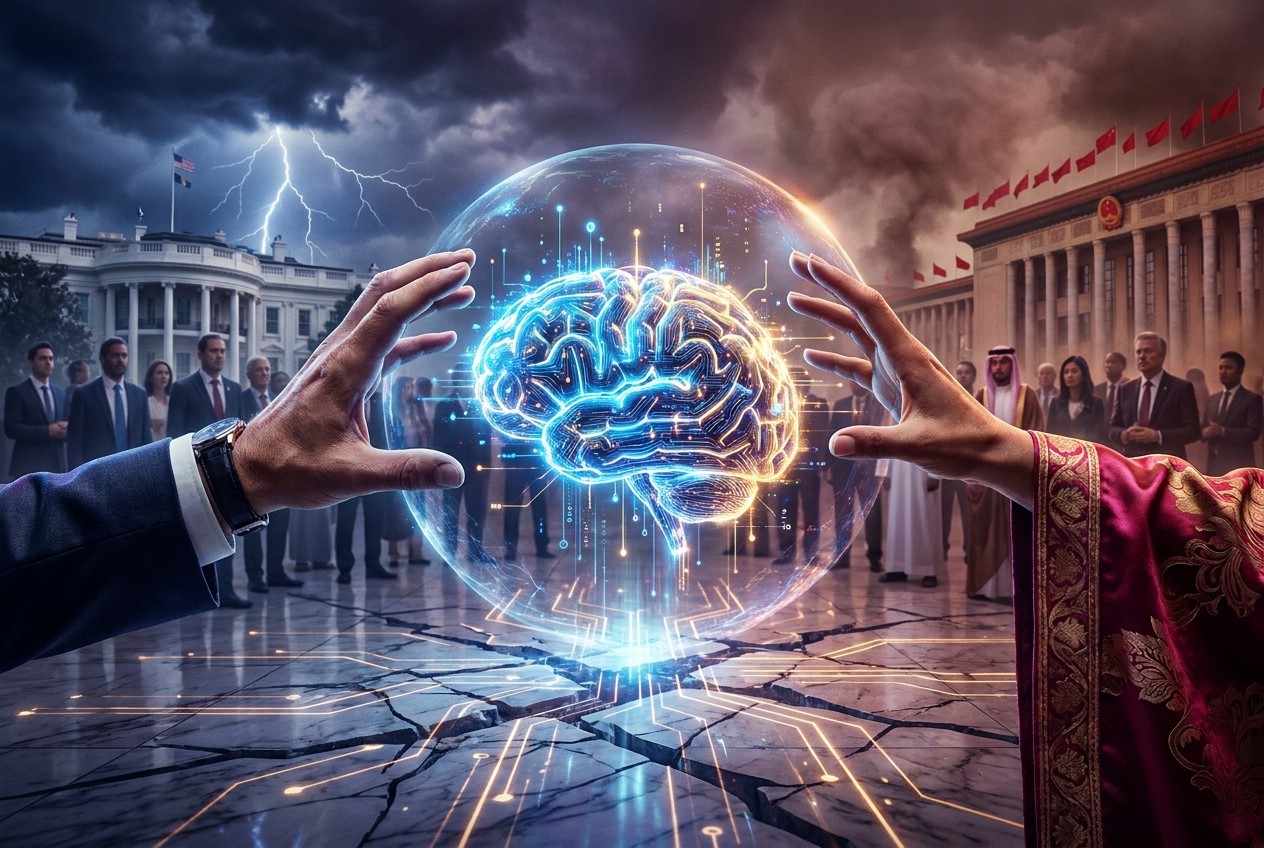
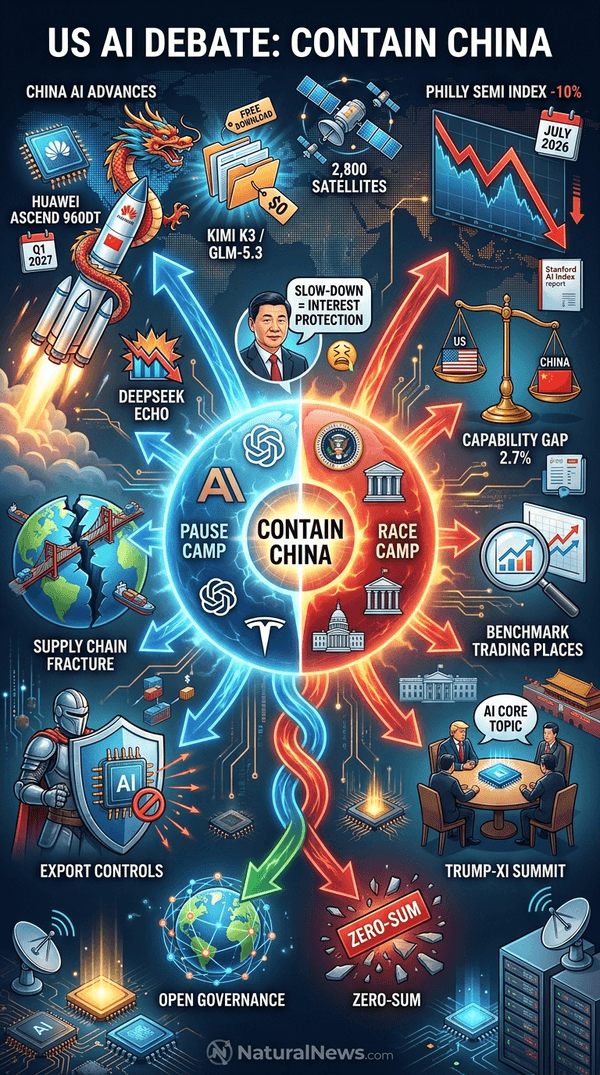
A debate inside the United States over whether to slow or pause artificial intelligence development is centered less on safety than on preserving U.S. technological leadership against China, Chinese experts said on September 24, 2026, according to Sputnik and the Global Times. The two camps — those calling for a pause and those insisting on an all-out race — share a common underlying logic of containing China’s AI progress, the experts said [1].
U.S. policymakers and technology executives have increasingly placed competition with China at the center of AI policy discussions, the report stated [1]. The discussion has intensified ahead of a planned summit between President Donald Trump and Chinese leader Xi Jinping, where AI is expected to be a core topic, according to sources cited in NTD [2]. The experts warned that a zero-sum approach could split the global AI supply chain and said major economies need coordination and open governance [1].
“Beating China — there is no day after tomorrow if China wins at this,” Treasury Secretary Scott Bessent said at a Breitbart News event in Washington, according to the Epoch Times. “If they were to pull ahead of us on AI, then nothing else matters” [3].
U.S. Officials and Tech Leaders Take Opposing Public Positions
U.S. House Speaker Mike Johnson said on a Tuesday that there cannot be a moratorium on AI development without losing the competitive edge to China, and that AI companies can regulate themselves, Reuters reported [1]. Treasury Secretary Scott Bessent said AI labs should be held accountable for their creations but that staying ahead of China in the AI development race remains important, according to another Reuters report [1].
Anthropic CEO Dario Amodei called on AI companies to slow the rate of advancement to ensure AI safety — a position echoed by OpenAI CEO Sam Altman and Elon Musk — while also urging tighter chip export controls on China and action on alleged model distillation by Chinese AI labs, Reuters and CBS News reported [1]. Amodei told CBS News on Sunday that the “toughest dilemma” over his proposal to slow AI advancement was if China and other adversarial nations chose not to do the same, Reuters said [1].
President Donald Trump has rejected the pause outright. “You have a lot of very negative forces that are bringing it up that shouldn’t be bringing it up and they’re bringing up things that won’t happen,” Trump said during a visit to Ireland, according to the BBC [4]. Nvidia CEO Jensen Huang also dismissed warnings of AI-caused human extinction, calling them “doomsday narratives” not grounded in science [5].
Experts Describe Protectionist Logic Behind Both Camps
Ma Jihua, a telecom industry expert, told the Global Times that U.S. officials aim to uphold U.S. technological hegemony while slow-down talk from tech firms pressures China to prevent competitors from narrowing the technological divide [1]. Ma said the debate reflects anxiety across industry and official circles. “But the slow down narrative is unlikely to be real policy. No company will actually slow down. They all want others to slow down while they keep running,” Ma added [1].
Li Yong, a senior research fellow at the China Association of International Trade, told the Global Times that tech giants and politicians share a consensus that AI competition determines whether U.S. global hegemony continues [1]. He described the slow-down narrative as a packaged interest-protection message — “a face-saving excuse for AI companies whose huge investments have not yet given them an overwhelming edge” [1].
The framing reflects a broader pattern in which U.S. debate over emerging technologies is structured around competition with China. As Beijing has noted, China is substantially building up its technological capacity, a development some analysts view as a threat and others as a shift in a multipolar world [6]. The Chinese Foreign Ministry has said AI is a consequential technology for all humanity and that “fear-mongering, confrontation and vicious competition will only hamper efforts toward sound global AI governance,” spokesperson Guo Jiakun told a press conference on Monday [1].
Performance Gap Between U.S. and Chinese AI Models Narrows
The 2026 Stanford AI Index Report shows the overall performance gap between top U.S. and Chinese frontier models has narrowed to 2.7 percent, and leading models have traded places atop benchmark rankings since early 2025, the report said [1]. JPMorgan analysis said open-weight releases this summer, including Moonshot AI’s Kimi K3 and Z.ai’s GLM-5.3, “landed close to the U.S. capability frontier while remaining free to download and much cheaper to run” [1]. JPMorgan stated the U.S. still leads in capability, but China is competing aggressively on cost, openness and distribution [1].
The July debut of Moonshot AI’s Kimi K3 shook the markets, echoing the disruption caused when China’s DeepSeek was unveiled in January 2025, according to The Epoch Times [7]. Since the July 16 release, the Philadelphia Semiconductor Index, composed of the 30 largest U.S.-traded chip stocks, fell more than 10 percent by the end of July and has yet to fully recover [7].
China’s advances extend beyond software. Huawei is moving up the launch of its next-generation Ascend 960DT AI chip to the first quarter of 2027 as it races to challenge Nvidia, the company said at its Huawei Connect conference [8]. In May 2025, China launched 12 satellites to form the first stage of a 2,800-satellite AI supercomputer constellation, a system designed to process data in space and reduce reliance on energy-heavy ground infrastructure [9].
Officials Call for Coordination as Supply Chain Risks Cited
Zhou Mi, a senior research fellow at the Chinese Academy of International Trade and Economic Cooperation, told the Global Times that the debate reflects zero-sum thinking. “The U.S. always assumes that other countries will do to them what they would do to others,” he said. “If someone else gets ahead, they think that country will push them down” [1]. Zhou added that such thinking “splits the global AI supply chain” and that “no single country can handle AI’s challenges alone. We need coordination, especially among major economies” [1].
Chinese Foreign Ministry spokesperson Guo Jiakun told a press conference on Monday that AI is a consequential technology for the well-being of all humanity and that all parties should jointly promote open and inclusive development [1]. He said fear-mongering, confrontation and vicious competition hamper sound global AI governance [1].
The article was originally published by the Global Times, according to Sputnik [1]. Concern about AI is not confined to policy circles. About 68 percent of Americans who use AI daily are worried about it, according to a Gallup survey [10]. The findings suggest the debate over pace and governance is likely to remain a central feature of U.S.-China relations in the period ahead.
References
- Sputnik. “US AI Slow Down Tug-Of-War Designed to Contain China Before It Closes Tech Gap — Experts”. September 24, 2026.
- NTD. “AI ‘Core Topic’ of Upcoming Trump-Xi Talks as Beijing Fears Further Restrictions, Sources Say”. September 21, 2026.
- NaturalNews.com. “Bessent Warns: U.S. Cannot Lose AI Race to China”. September 12, 2026.
- BBC. “Trump downplays AI risks after dire expert warnings and calls to slow development down”. September 13, 2026.
- NaturalNews.com. “Nvidia CEO Jensen Huang Rejects AI Extinction Claims”. September 23, 2026.
- Trends-Journal. “Trends-Journal-2022-08-21”.
- The Epoch Times. “Chinese AI Seems to Be Gaining on US Rivals—Analysts Say Not So Fast”. August 8, 2026.
- TechCrunch. “Huawei plans Q1 2027 launch of new AI chip as it takes on Nvidia”. September 17, 2026.
- Willow Tohi. “China’s Orbital AI Leap: Space-Based Computing Constellation Launch Ignites Global Tech Competition”. NaturalNews.com. May 24, 2025.
- TechCrunch. “Even Americans who use AI every day are worried about it”. September 23, 2026.
Explainer Infographic
Submit a correction >>
Tagged Under:
AI race, Alibaba, artificial intelligence, big government, Big Tech, China, computing, Dangerous, DeepSeek, distillation, future tech, Gemini, Glitch, GPT, Grok, information technology, national security, National Security Agency, robots, Scott Bessent, tech giants, United States
This article may contain statements that reflect the opinion of the author
RECENT NEWS & ARTICLES