Texas Regulators Approve AI Data Center Co-Location With Wind Farm, Impose Curtailment Conditions
08/04/2026 / By Edison Reed
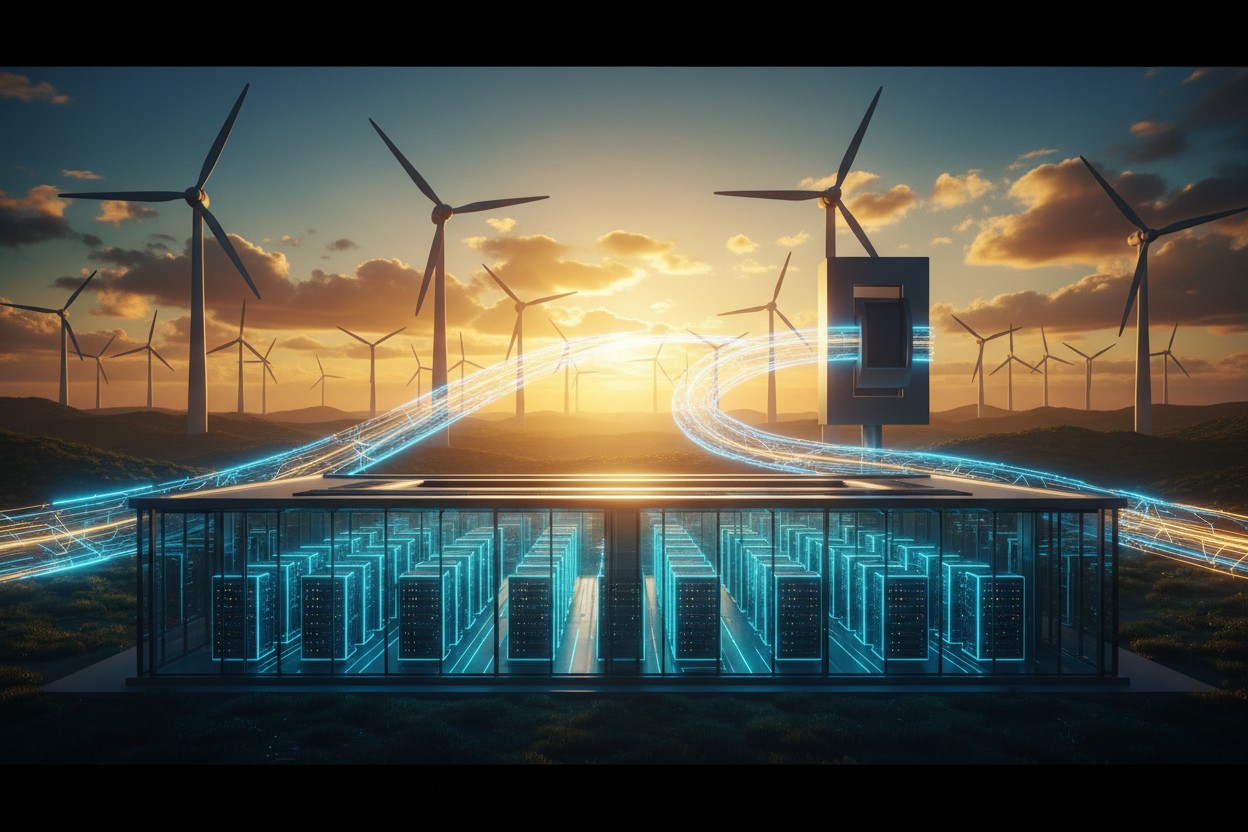
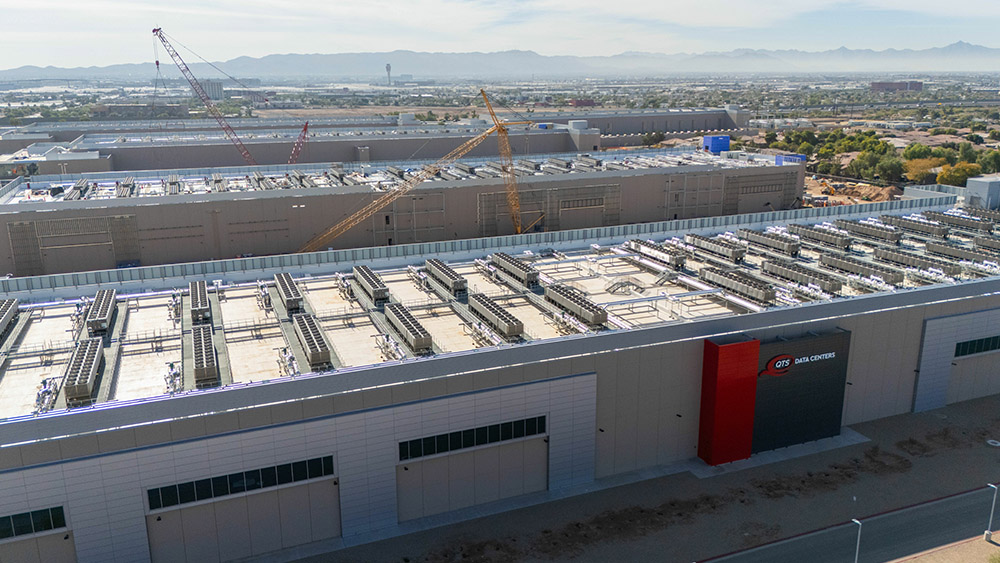
The Public Utility Commission of Texas approved a net metering arrangement on July 23 for a 260-MW AI data center co-located with a wind farm of roughly 265.5 MW in the Electric Reliability Council of Texas territory, according to the commission’s order. The approval came after the developer argued the second data center planned for the site should not face the same curtailment requirements as the first, because the combined load of about 525 MW exceeds the generation capacity of the wind resource [1].
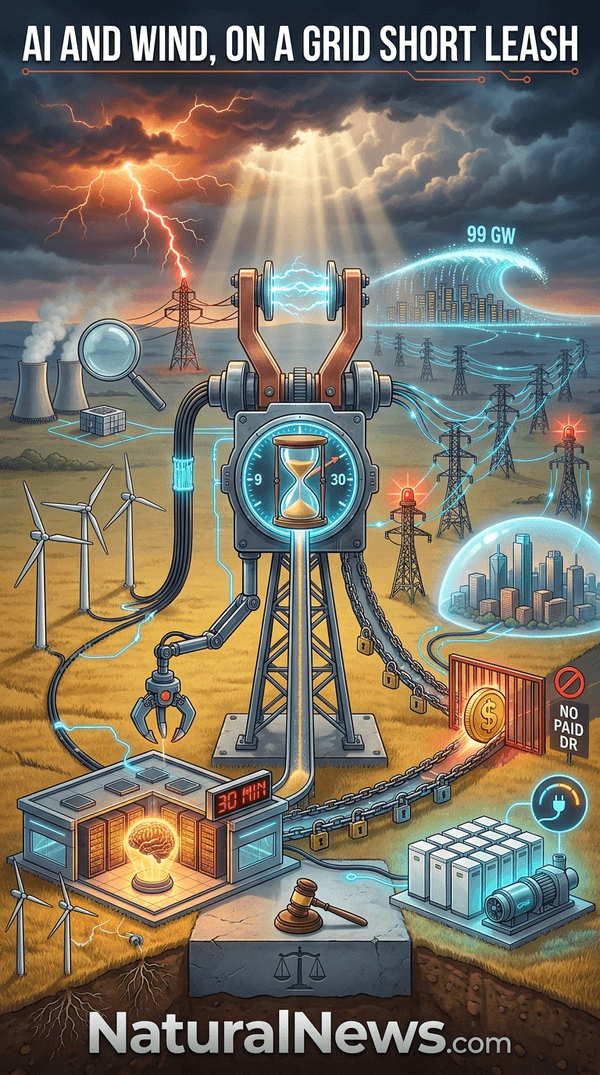
The commission rejected that argument. According to the July 23 order, the data center must be capable of curtailing its full load within 30 minutes during grid emergencies, including physical breaker disconnection if necessary. The order also bars the project from participating in paid demand response programs tied to the arrangement [1]. The proceeding represents one of the first major tests of Texas’ SB 6, which became law last year and established new rules for large loads in ERCOT’s territory, including giving the grid operator authority to disconnect data centers during grid emergencies [2].
Standards Under SB 6
Rather than creating a project-specific exception, commissioners largely adopted ERCOT’s proposed reliability conditions, according to the order. The decision allows the co-location arrangement to move forward while establishing operating requirements for future behind-the-meter projects [1]. The case illustrates how state regulators are applying the framework of SB 6, which Texas Republican Governor Greg Abbott signed into law on June 20, 2025, requiring data centers and other large, non-critical power consumers connected to the ERCOT transmission grid to accept curtailment during periods of grid strain [2].
The approval comes amid a period of rapid load growth in the state. ERCOT reported that grid connection requests jumped to 99 GW, up from 40.8 GW a year earlier, driven by the rise of AI, data centers, cryptocurrency mining, and hydrogen production [3]. Chris Talley, co-founder of GridTracker, wrote in a LinkedIn post following the decision that the order is not a “death blow” to co-location in ERCOT [1]. “It just means that this architecture now essentially requires full backup capacity,” he said [1].
Curtailment and Operating Requirements
The order requires the data center to operate with greater flexibility than a traditional industrial load. The order states ERCOT should provide 60 minutes’ advance notice “when practicable,” while allowing the operator to voluntarily commit to a faster 10-minute response [1]. By prohibiting the project from receiving compensation for reducing its load during grid emergencies, the order distinguishes mandatory emergency curtailment from voluntary grid services [1].
The ruling treats the ability to rapidly shut down as a reliability requirement for operating behind generation, according to the commission’s order [1]. In a follow-up message to Utility Dive, Talley clarified that by “full backup,” he meant resources capable of carrying the load off-grid for a meaningful period of time, rather than simply riding through a short interruption [1]. The conditions reflect a view that co-located load must not compromise the availability of generation capacity to the broader grid, a concern that has grown as electricity demand from data centers continues to climb nationwide [4].
Developer and Stakeholder Positions
Crusoe, the developer of the AI data center, and Ensign, the large load customer that plans to operate the site, argued that forcing the entire site offline was disproportionate and that additional curtailment was unnecessary after the earlier reliability condition on the co-located wind project, according to the order [1]. Commissioners largely adopted the administrative law judge’s recommendation, including revisions from Chairman Thomas Gleeson, and concluded that allowing the second load to remain online while the first is curtailed would undermine the goal of ensuring generation capacity is available to the grid during emergencies [1].
The case also attracted filings from the Texas Competitive Power Advocates and natural gas producer BKV, which argued the proposed framework could discourage future co-location projects [1]. PUCT staff contended those parties lacked standing under the governing statute, and the commission’s final order did not address their arguments [1]. The dispute highlights the competing interests involved as states address how large AI facilities should be integrated into grid operations [6].
Implications for Future Co-Location
The order may serve as a template for other co-located loads in Texas, according to observers of the proceeding [1]. Talley pointed to a pending co-location application from Amazon and Vistra to build a data center campus next to the Comanche Peak nuclear plant, southwest of Fort Worth, as a case to watch [1]. “How ERCOT and the Commission treat that arrangement will be very telling,” Talley said [1].
The decision establishes that co-location arrangements in ERCOT should include resources capable of carrying the load off-grid for a meaningful period, rather than only riding through short interruptions [1]. As data centers are expected to consume roughly 20 percent of U.S. electricity by 2035 according to a BloombergNEF report, the operating standards set by Texas regulators are likely to inform how other states approach similar arrangements [4]. The Texas decision reflects a broader regulatory focus on grid reliability as demand from AI accelerates, with seven major U.S. grid operators having warned Congress of an impending electricity capacity crisis [5]
Conclusion
The commission’s order in the Crusoe and Ensign case establishes a baseline for how co-located data centers must interact with the ERCOT grid during emergencies. The decision requires large loads to accept mandatory curtailment as a condition of operating behind generation, rejecting arguments that such requirements are disproportionate when total load exceeds on-site generation capacity [1].
For developers pursuing co-location arrangements in Texas, the order signals that regulators will treat rapid shutdown capability as a core reliability requirement rather than an optional feature. The pending Amazon and Vistra application at Comanche Peak will test whether the same standards apply to nuclear-backed arrangements, and the outcome is likely to shape the future of behind-the-meter generation in the state [1].
References
- Marlene Wilden. “Texas Approves AI Data Center Co-Location Next To Wind Farm, With Curtailment Caveats”. ZeroHedge. August 3, 2026.
- Belle Carter. “Texas enacts landmark law to curb data center power consumption amid grid strain”. NaturalNews.com. July 1, 2025.
- Willow Tohi. “Texas Grid Faces AI-Driven Energy Crunch: 99GW Demand Surge Sparks Debate on Fossil Fuels, Nuclear and Renewables”. NaturalNews.com. March 11, 2025.
- “Data centers expected to use 4x more electricity by 2035”. TechCrunch. July 21, 2026.
- Willow Tohi. “The Looming Electricity Crunch: A Crisis of Supply and Demand”. NaturalNews.com. April 10, 2025.
- GPL Ghostscript 860. “Reinventing Electric Utilities: Competition, Citizen Action, and Clean Power”.
Explainer Infographic
Submit a correction >>
Tagged Under:
AI expansion, artificial intelligence, big government, Big Tech, computing, data centers, future tech, Glitch, information technology, outrage, power, power demand, power grid, real investigations, robots, tech giants, technocrats, Texas
This article may contain statements that reflect the opinion of the author
RECENT NEWS & ARTICLES